



Floors carry more visual weight in a home than most people realize. Walk into any room and your eyes naturally drop toward the ground before taking in anything else. A space filled with beautiful furniture can still feel completely off if the floor elements are out of proportion. Buying a great sofa is only part of the journey. The piece that truly anchors your entire design is what sits underneath everything else. At Rugs Town, we talk to homeowners regularly who fall completely in love with a pattern but bring home entirely the wrong size for their space.
Picking something too small makes the whole living area feel cramped and disconnected, like a tiny island floating in the middle of nowhere. Going too large swallows the room whole. Neither looks intentional. Getting the proportions right makes everything else fall into place naturally.
The Basic Principles of Floor Measurement
Before diving into specific rooms, a few general rules always apply regardless of space. A reliable standard is keeping around 18 inches of bare floor visible around the perimeter of the rug. This frames the room nicely and lets beautiful hardwood or tile underneath breathe a little. For tighter spaces or smaller apartments, scaling that border down to 8 or 12 inches works perfectly well.
Measuring furniture is just as important as measuring open floor space. One genuinely useful trick is laying blue painter's tape directly onto the floor to map out exact dimensions before ordering anything. It shows precisely how much walking room remains and removes all the guesswork before spending a cent.
Sizing for the Living Room
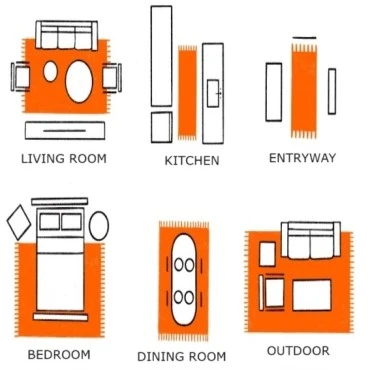
The living room is where most sizing mistakes happen because layouts vary so much from home to home. Three core arrangements tend to cover most situations.
All Furniture Legs on the Rug
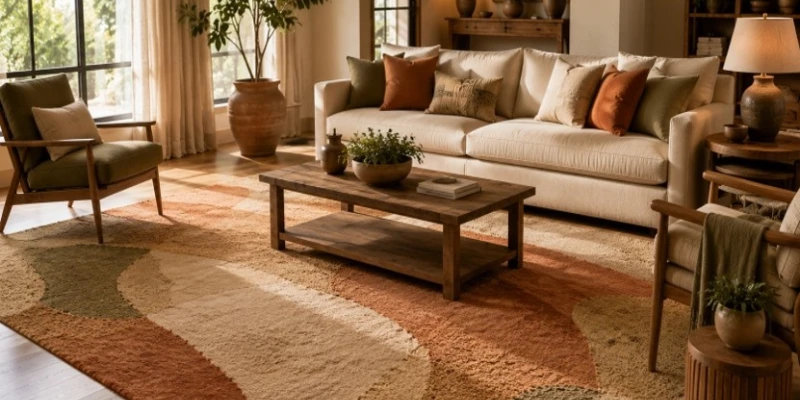
This approach demands a larger piece, typically An [8x10 or 9x12]. Sofas, accent chairs, and tables sit entirely on the surface, creating a unified and polished seating zone. It works beautifully in open-concept homes where defining a clear boundary for the sitting area matters.
Front Legs Only on the Rug
This is the most popular arrangement for standard homes. The front feet of the couch rest on the rug while the back legs stay on the bare floor. It connects seating together without requiring a massive size or budget. An 8x10 Area Rug Size works almost perfectly every time for this layout.
Coffee Table Only
Common in compact apartments or narrower rooms, only the central coffee table sits on the rug while chairs and couches remain completely off it. If going this route, make sure the rug extends past both ends of the sofa in length. A 5x8 usually handles this arrangement well.
Dining Room Rules Worth Following
Dining rooms come with a stricter set of sizing requirements involving both comfort and practicality. The rug must extend a minimum of 24 inches past all edges of the dining table. This ensures chairs stay fully supported when guests pull them back from the table without catching on the border edge, which happens constantly when the rug is too small.
Shape matters here too. Round rugs pair naturally with round tables. Rectangular pieces suit longer dining tables. A simple way to check sizing before ordering is pulling chairs out naturally as if sitting down for a meal and measuring that total footprint including the extended chairs.
Bedroom Sizing Made Simple
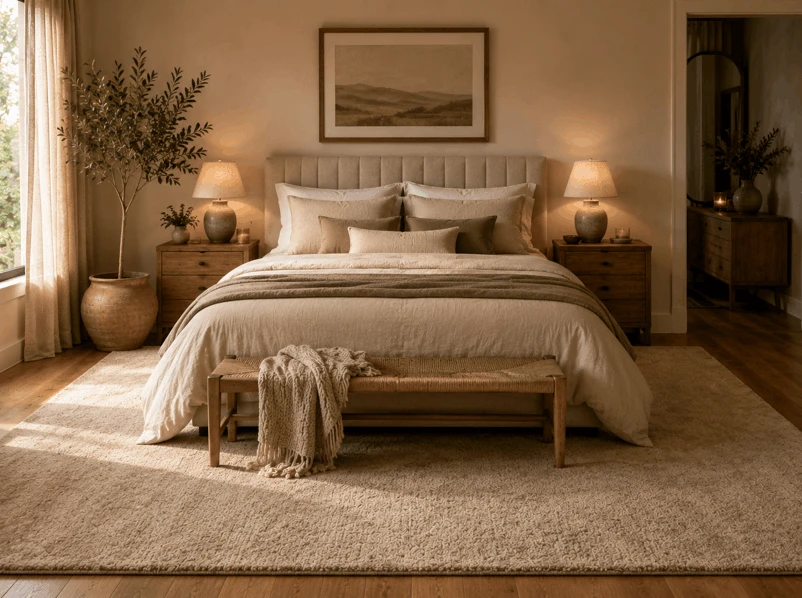
The bedroom should feel like a proper sanctuary. When feet hit the floor first thing in the morning, a soft warm landing beats cold hardwood every single time.
For a queen bed, an 8x10 works beautifully. Sliding it horizontally under the bed and pushing it up just past the nightstands leaves a comfortable two to three feet of soft coverage on both sides of the mattress. For a king bed, a 9x12 provides the visual weight needed to look balanced and proportional. Tighter bedrooms can manage with a 6x9 pushed further toward the foot of the bed.
Entryways and Hallways
High-traffic zones take a real beating from daily use. For hallway runners, keeping all furniture legs completely off the runner path prevents tripping hazards. Always check pile height to make sure the front door can swing open and close without catching. For wider entry foyers, a 4x6 or 5x8 accent piece grounds the space and creates a genuinely welcoming first impression.
Finding Your Perfect Fit
Getting the size right comes down to simple measurements and understanding how the space actually gets used every day. Once dimensions are locked in, choosing colors and patterns becomes the enjoyable part. Browse the full collection at Rugs Town to find the right match for your home and let the floors finally do what they're supposed to do.
